Your current room is only usable in mild weather
Older conservatories often overheat in summer and lose heat quickly in winter. A full conversion route lets you tackle structure, roof and glazing as one coordinated upgrade.
Conservatory Conversion Specialists in Kent
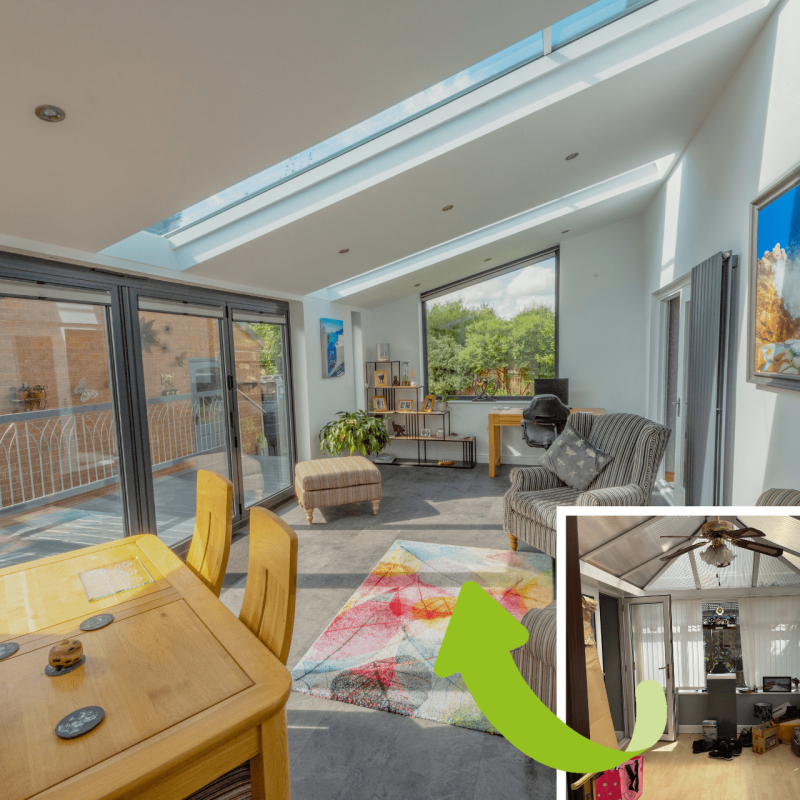
If your current conservatory is underused, we can help convert it into a modern, practical room with improved layout freedom, stronger thermal performance and an extension-led finish.
Many older conservatories no longer fit how households live today. A full conversion route helps replace seasonal discomfort with a room designed for regular use.
Older conservatories often overheat in summer and lose heat quickly in winter. A full conversion route lets you tackle structure, roof and glazing as one coordinated upgrade.
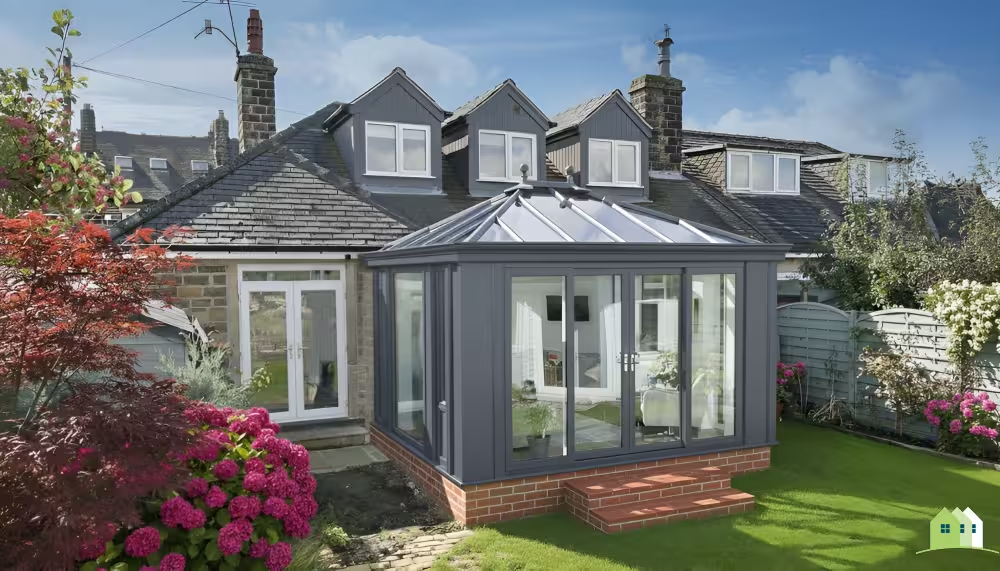
Replacing only the roof keeps the same wall and opening positions. A conversion allows windows, doors and wall lines to be redesigned around how you use the space now.
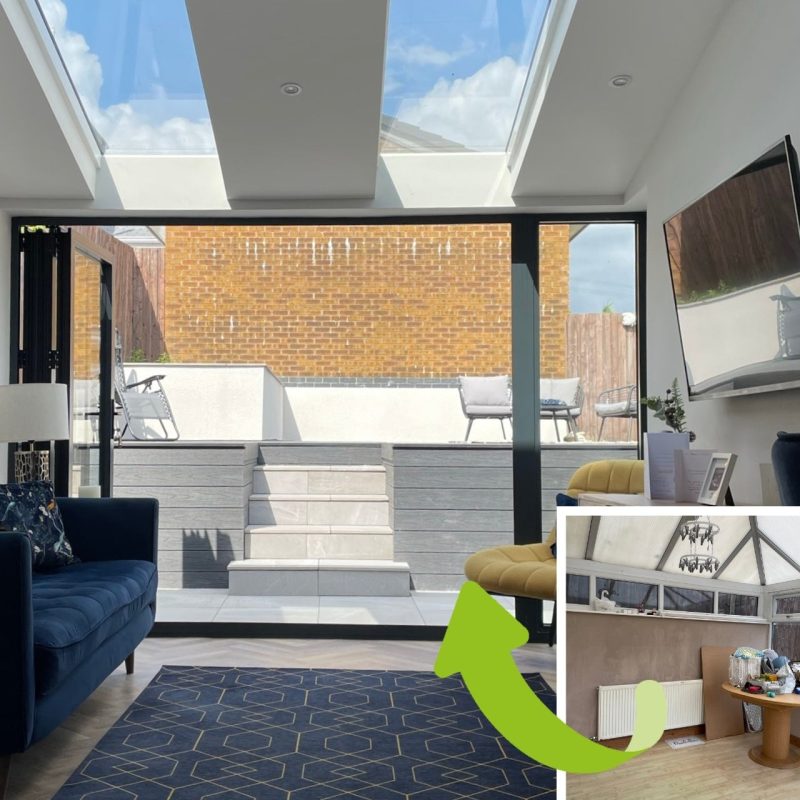
For suitable properties, conversion systems can reduce site disruption compared with a full new masonry extension while still delivering a substantial change in day-to-day comfort.
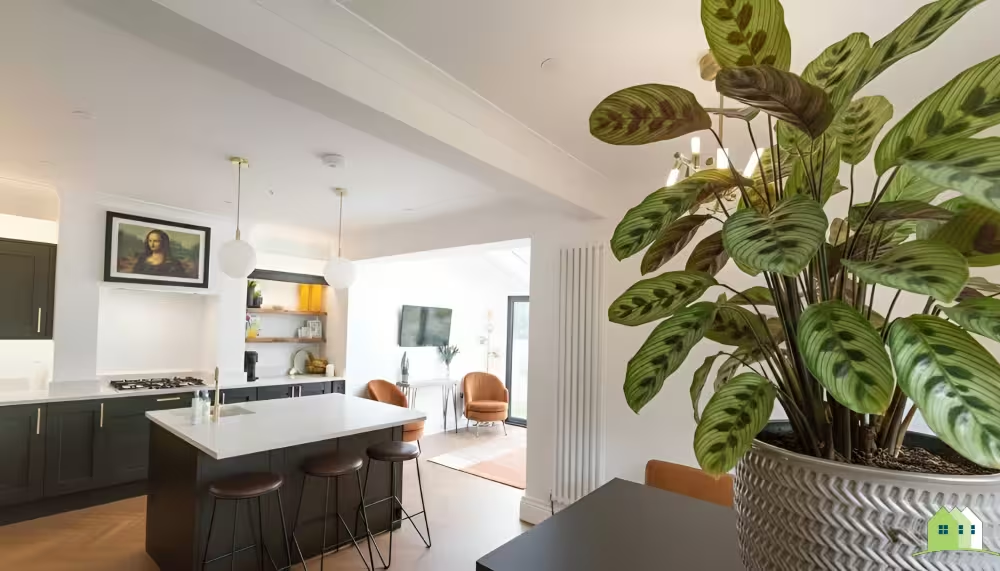
A well-specified conversion can create usable floor area for dining, family living or home working, helping the room feel fully integrated with the rest of the property.
The main value comes from combining speed, design freedom and specification quality in one managed project path.
Once design and pre-site preparation are complete, the on-site conversion phase is typically measured in days, not months.
Window and door positions can be re-planned so circulation, furniture zones and sightlines work better than in the original conservatory.
Roof, glazing and wall specification are selected together to support better heat retention, improved summer control and lower wasted energy.
Internal finishes, trims and external detailing are scoped up front to deliver a room that feels like part of the home rather than an add-on.
Design, technical checks, installation sequencing and final handover are coordinated by one Homebrite team so responsibilities stay clear.
Each project is different, but these are the stages used to keep design, cost and installation aligned from start to completion.
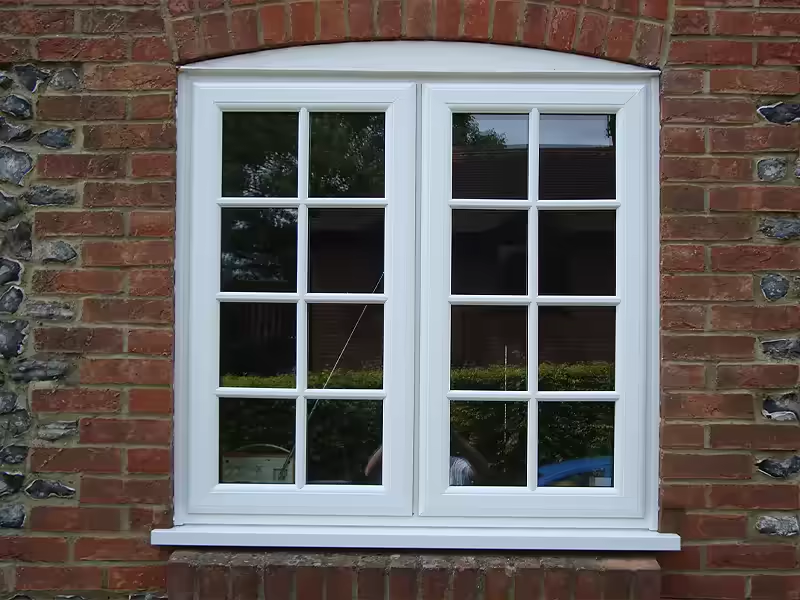
Week 1
We check the existing footprint, confirm structural suitability and agree how you want the converted room to function day to day.
Week 2
You receive a clear quote covering roof route, glazing level, security hardware, finishes and any planning considerations identified during survey.
Pre-Build
Materials and conversion components are prepared to reduce avoidable delays once on-site work begins.

Build Window
Your installation team completes the agreed conversion sequence, from strip-out and structure to weatherproofing and internal finishing.
Handover
We complete handover checks and provide care guidance and guarantee paperwork so long-term maintenance expectations are clear.
Conversion outcomes depend on choices made before installation. These are the areas we scope early for predictable results.
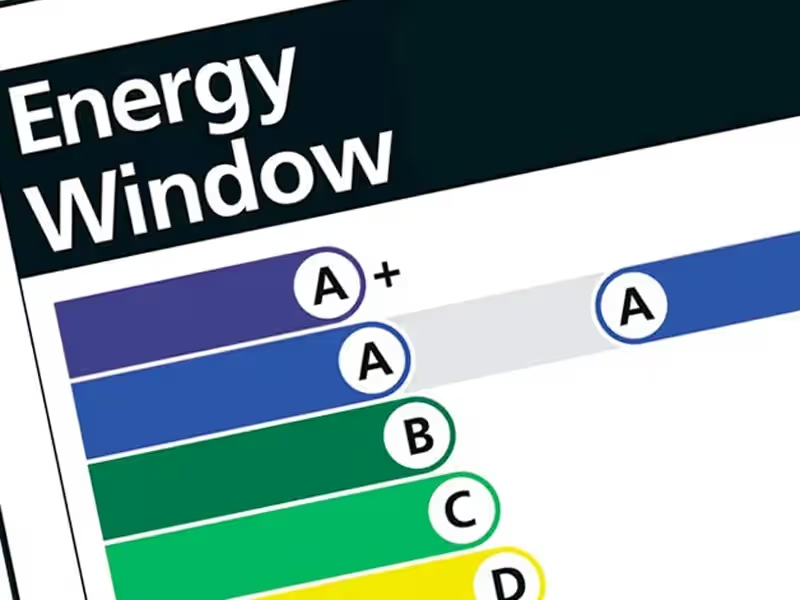
Performance is reviewed as a whole system. We compare roof, glazing and frame combinations to improve all-season comfort, not only headline ratings.

For exposed or sunny elevations, upgraded glazing build-ups can reduce external noise and help manage glare through peak daylight hours.
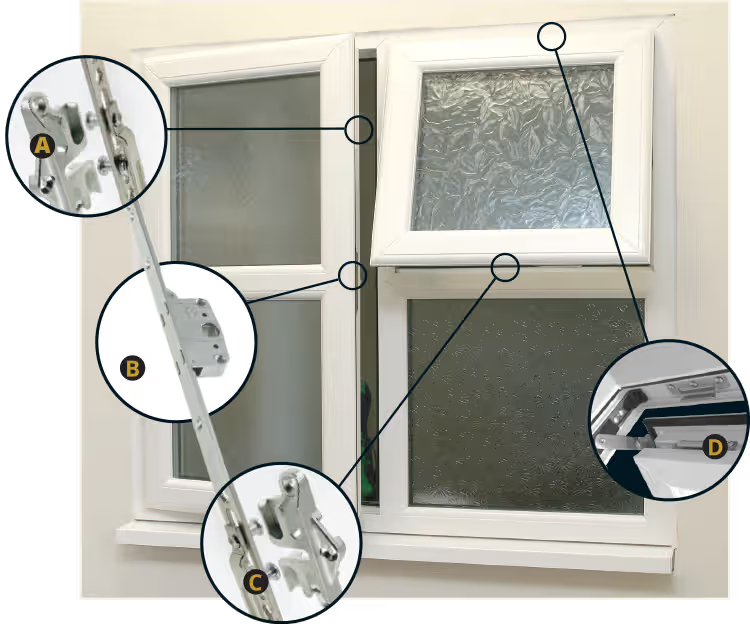
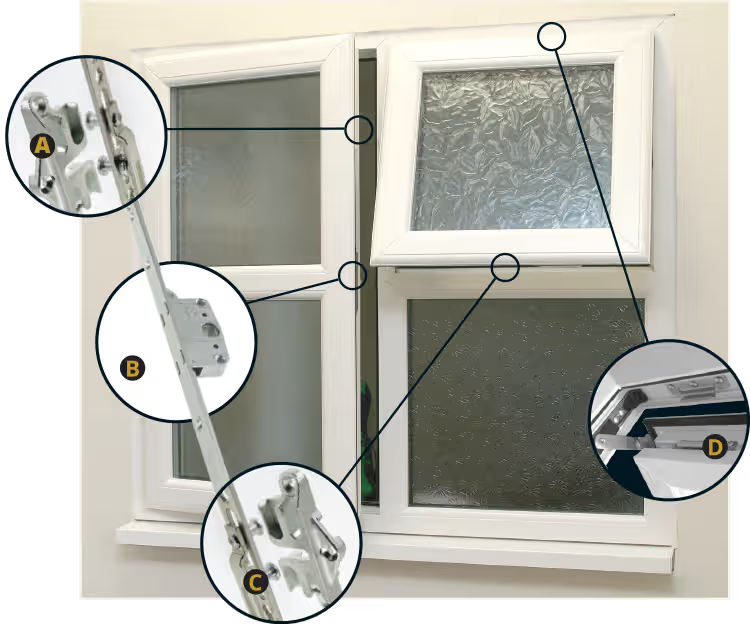
Locking hardware, hinge combinations and specification routes are set before installation so security priorities are built in from the outset.
Where planning context matters, we review footprint, roof form and external proportions early so there are fewer design surprises later.
Use these examples as prompts for your own layout and specification discussions before finalising your conversion brief.
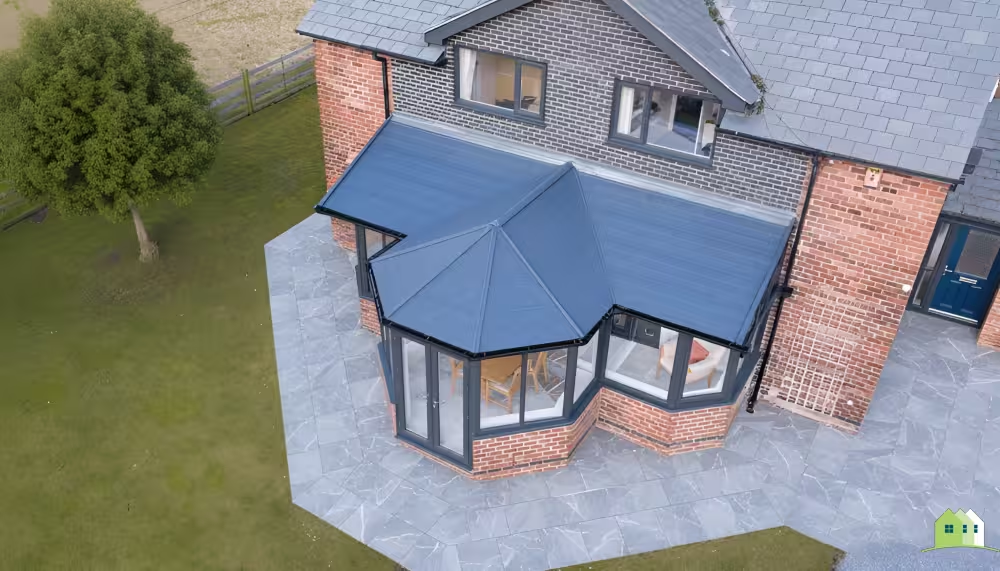
This style of conversion focuses on creating one reliable living area with better thermal balance and more practical furniture zoning.
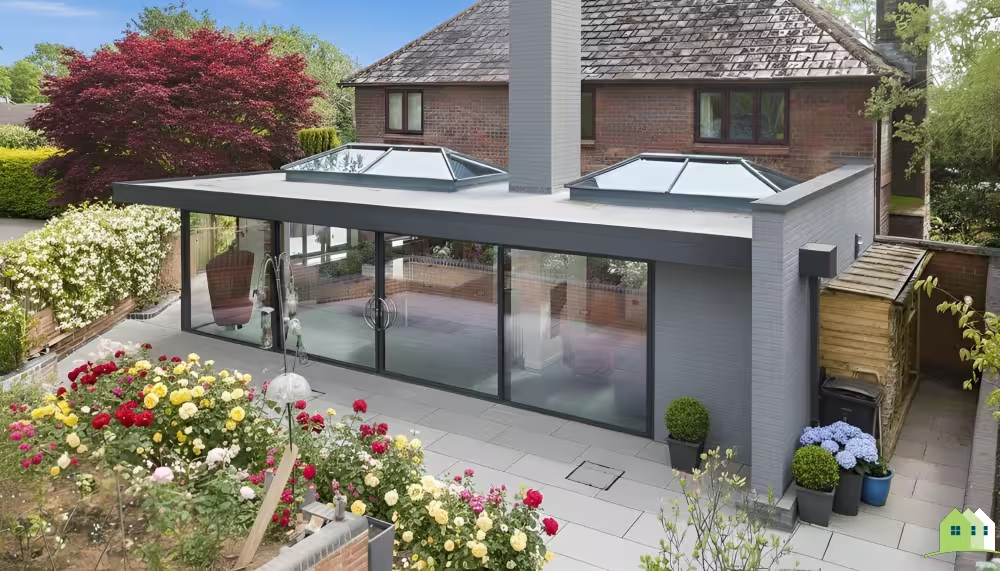
By redesigning where windows and doors sit, households can improve flow between kitchen, garden and main living zones.

A dedicated design conversation helps narrow roof, glazing and finish options before final sign-off, reducing costly late-stage changes.
It depends on your goal. If the issue is only roof performance, a roof replacement may be enough. If you also need better layout, opening positions and overall room quality, a full conversion is usually the stronger long-term route.
Often yes, but only after survey checks confirm suitability. Reusing a sound base can reduce disruption, but each property still needs a technical assessment first.
The on-site phase is typically much shorter than a traditional extension build once design, approvals and preparation are complete. Your confirmed timeline is provided with your project quote.
In many projects, slimmer wall construction and layout redesign can increase practical internal use of the same footprint. The exact gain depends on your current structure and chosen design.
Some projects fit permitted development rules, while others need formal permission. This is checked against your property type, location and scope before installation starts.
Start with an Instant Quote, then move to survey-led costing. Final pricing reflects measured dimensions, chosen specification and any planning or structural requirements.
Start with a fast quote, then refine the technical detail with a measured survey and full specification review.